
NEW 4th edition, AHLS Provider Manual
Ensuring the health of patients exposed to hazardous materials including chemical, biological, radiological and nuclear agents, is a non-stop, international effort undertaken by the Advanced Hazmat Life Support (AHLS) Program.
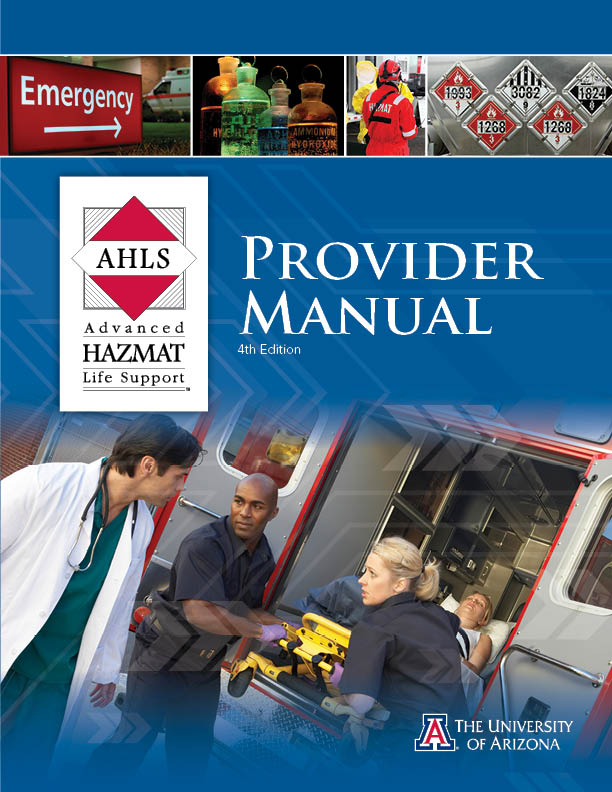 AHLS announces the publication of the 4th edition of the Advanced Hazmat Life Support Provider Manual with updated material, photos, illustrations and data.
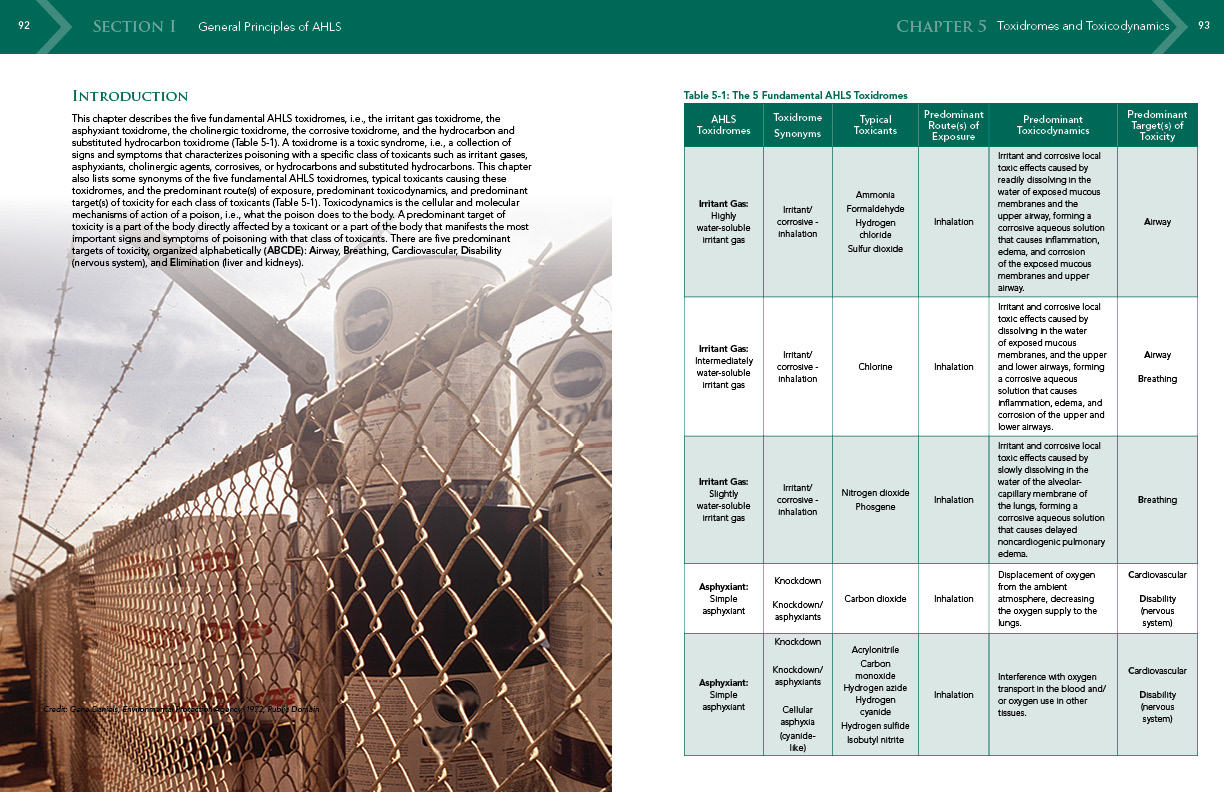
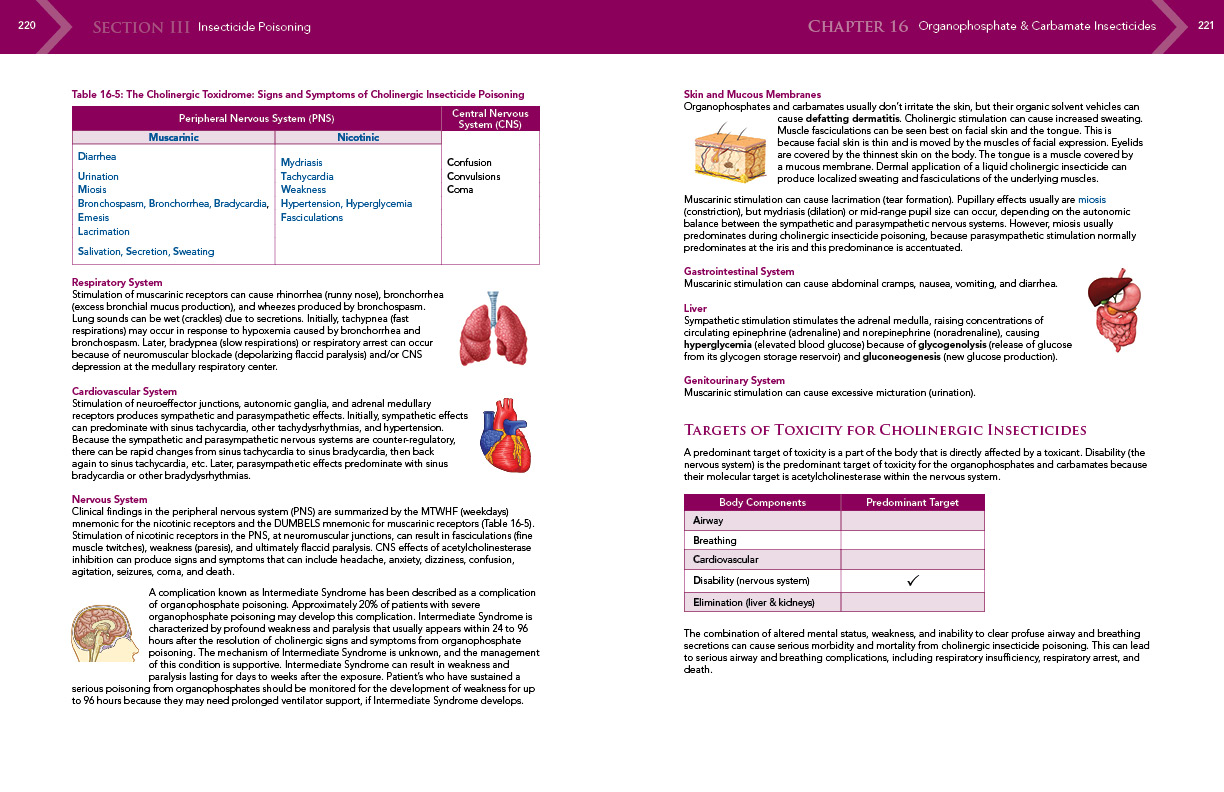
The updated AHLS Provider Manual, edited by Frank G. Walter, MD, includes a beautiful color palette, photos, images and tables throughout. It closely follows the PowerPoint slide presentation in the course. The 503-page manual lies flat when open, whether at the beginning, middle or end of the book.
Each antidote chapter includes a new heading, “Populations with Functional Needs,” which addresses the specific needs of pregnant and nursing women, pediatric and geriatric patients, or those with renal insufficiency.
Common graphics have been added throughout the text for signs and symptoms of each type of poison to signify the type of system affected, i.e.: lungs for respiratory system, heart for cardiovascular system. Graphics of ABC’s of Primary Survey and Resuscitation and the Poisoning Treatment ParadigmTM are also throughout the book to assist in finding information quickly.
The AHLS Provider Course and its accompanying Provider Manual is part of a two day, 16 hour course that prepares healthcare professionals in the medical management of patients exposed to hazardous materials. AHLS has trained over 16,200 healthcare professionals, representing 64 countries, around the world.
Available for purchase, $175
Latest WISER phone app update available
http://wiser.nlm.nih.gov/whats_new_iOS_3_1.html#customProfile
WISER for iOS 3.1.1, a universal app for Apple iOS devices, is now available. This new release provides full support for iOS 7 and above, introducing a new look and feel to match the latest iOS releases.
As of 5/13/2014, version 3.1 of WISER for Android is available. See what's new in version 3.1.
WISER for Android 3.1 is now available.
- WISER's popular Help Identify Chemical capability is now available on the Android platform. Identify and validate an unknown chemical based on the following criteria:
- physical properties of the substance gathered by observation or sensors
- signs and symptoms of victims of exposure
- the ability to categorize a substance, such as a substance used in a meth lab or a flammable substance
- hazard values from NFPA 704 placards
- transportation identification, including DOT placards, type of road trailer, and type of rail car
- Use WISER's protective distance mapping feature on your Android device. Visualize the areas likely to be affected during the first 30 minutes after a substance is spilled or released on a live map. The Department of Transportation's Emergency Response Guidebook is the source of WISER's protective distance data.
3rd edition AHLS Instructor Manual available
Purchase for $45 US
The Instructor exam has been refined and is now 25 questions instead of 35 and has 4 foils instead of 5.
At this time, Instructors do not need to take a new Instructor exam to be re-verified as Instructors, but this may change in the future.
Updates to AHLS Instructor Manual
3rd Edition, May 2010
- Updated policy regarding Medical Director and Board-Certified Toxicologist
The Board-certified toxicologist and/or Medical Director must be present for the entire two days of the Provider Course. This includes teaching at least one lecture and tabletop exercise. (p. 16-18)
- David A. Kolb – Kolb Learning Cycle – This new section has Instructor participants complete a Learning Style Inventory questionnaire to discover what style of learner they are. Based on this information and finding out about other learning styles, they will better informed Instructors and able to teach all types of learners.
- Description of the adult learning cycle (p. 65)
- Four phase of learning cycle described (p. 65)
- Four learning styles (p. 66)
- Kolb Learning Style Inventory (p. 72)
- Application online
- Details about how to complete an online application (Appendix C, p. 92-97)
- Information about finding faculty (p. 38)
- Faculty Fees (p. 39)
- Funding sources in the USA (p. 39)
- Courses listed together rather than separated by chapter
- Provider, Instructor, AHLS for Chemical Burns, AHLS for Toxic Terrorism
- Inclusion of Chemical Burns and Toxic Terrorism course information
- No exam (p. 27)
- No verification (p. 24)
- Any AHLS Instructor can teach these courses; counts toward the 4 in 4 years (p. 18)
- Do not need to have MD/Tox for course – Does not appear on a specific page, but descriptions for Medical Director and Toxicologist now specify they are only needed for Provider course.
- Marketing Information
- E-mail ads are created and sent out to get people to the course (p. 48)
- Basic Hazmat Life Support (BHLS)
- Can take BHLS online for CE credit (p. 23)
- Re-verification
- Re-verify online (p. 8, 29)
- Disclosure Statement and Form for submission (p. 45) – Specifies that the Form must be signed an returned to Course Director prior to teaching so it can be stated on the course program if there is any conflict.
AHLS publications
- Advanced Hazmat Life Support (AHLS): Development and Demographics from 1999 through 2003
The Internet Journal of Resuce and Disaster Medicine. 2005; Vol. 5, Num. 1
By Frank G. Walter, Harvey Meislin, Benson Munger & Danielle Crounse Like us on Facebook for the latest news!
 The
The